About Amsin

African Medical Samaritans Organisation (AMSIN), we are dedicated to transforming lives through accessible healthcare, sustainable development, and impactful community outreach across Africa.
OUR PROGRAMS

AMSIN’s programmes are organised in the thematic areas below. Each is delivered through qualified personnel, approved protocols and agreed partner roles.
Border Health, Preparedness and Community Surveillance
  • Strong community health surveillance networks (CHSN) across the national border communities.
  • Community education and risk communication on prevention and where to seek timely assessment.
  • Community-to-facility referral pathways and coordination with authorised public health partners.
  • Volunteer orientation on safe engagement, confidentiality, stigma reduction and escalation of urgent concerns.
  • Preparedness collaboration with district, national and cross-border actors within agreed roles.
Migration and Humanitarian Health Access
  • Health information and service navigation for migrants, refugees, displaced people, migrant workers and host communities.
  • Referral support for primary care, maternal and child health, immunisation, nutrition and other essential services.
  • Attention to language, cost, distance, documentation and discrimination barriers.
  • Community listening to identify gaps without unnecessary collection of sensitive data.
  • Refugee Community Health Captains (RCHC): peer-leaders drawn from displaced or migrant refugee communities are identified and trained to bridge the gap between refugees’ health care needs and local health systems, providing culturally sensitive health education and translation support and connecting people to services through established channels.
Human Trafficking, Substance/Drugs Abuse and Mental Health
  • Community-led surveillance to empower local residents and grassroots groups — such as local police, border guards, social welfare workers and healthcare staff in border towns — to identify and respond to suspicious recruitment, irregular events and criminal patterns.
  • Community network and digital campaigns to warn vulnerable youths and migrants about irregular migration risks, fraudulent job offers and deceptive recruitment patterns, sharing real testimonies and data.
  • Partnerships to provide accessible, non-judgmental healthcare, translation and harm-reduction programmes, with strong referral to safe spaces for psychosocial support, rehabilitation, legal aid and vocational training to help survivors reintegrate safely.
Nutrition
  • Nutrition education, including appropriate infant and young child feeding information.
  • Screening or referral only through trained personnel and approved protocols.
  • Linkages to nutrition support for pregnant and breastfeeding women, children and others with identified needs.
  • Nutrition awareness integrated into community outreach and humanitarian health activities.
Maternal, Newborn and Child Health
  • Information and referral for antenatal and postnatal care, skilled delivery, immunisation and child health services.
  • Community guidance on timely care-seeking and available service points.
  • Caregiver education on prevention, child wellbeing and use of services.
  • Work with qualified providers; AMSIN does not replace clinical or emergency obstetric care.
Adolescent Health and Wellbeing
  • Age-appropriate health information and connection to adolescent-responsive services.
  • Education on nutrition, menstrual health, prevention and psychosocial wellbeing, with safeguarding.
  • Meaningful youth participation in outreach design, respecting privacy and child protection.
Communicable and Non-Communicable Diseases
  • Screening, first aid treatment and referral through trained personnel and approved protocols.
  • Awareness activities integrated into community outreach and humanitarian health activities.
  • Community guidance on timely care-seeking and available service points.
Medical Missions Outreach and Essential Care Linkages
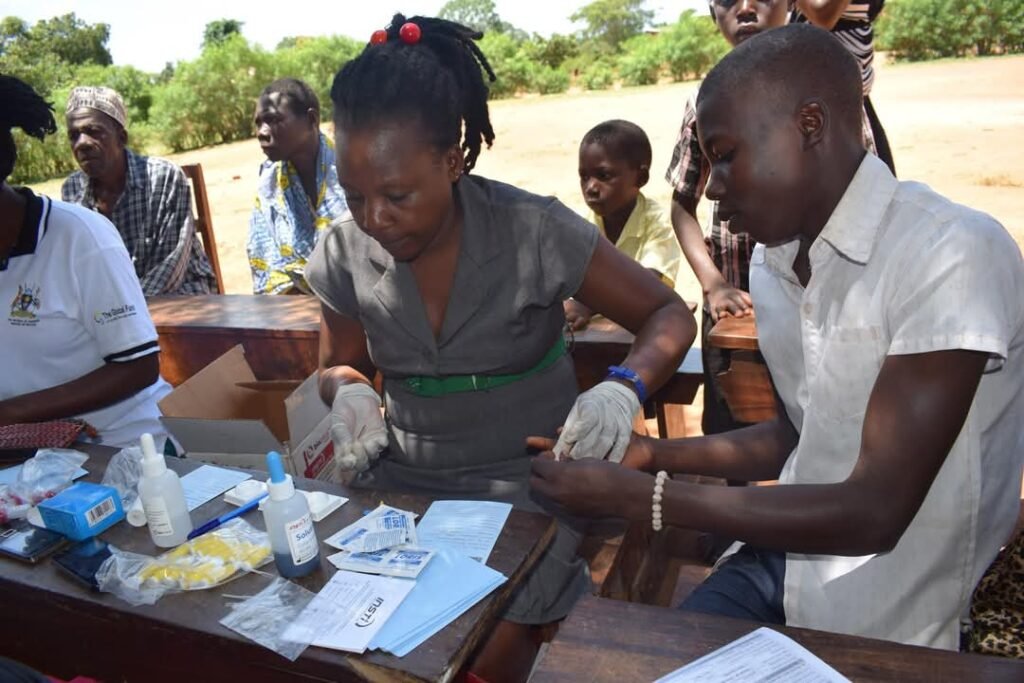
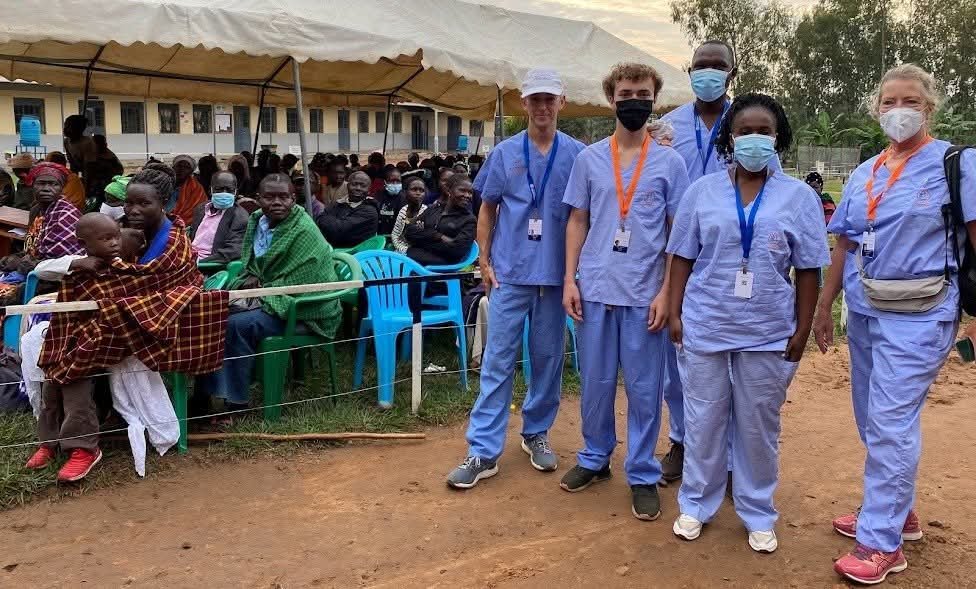
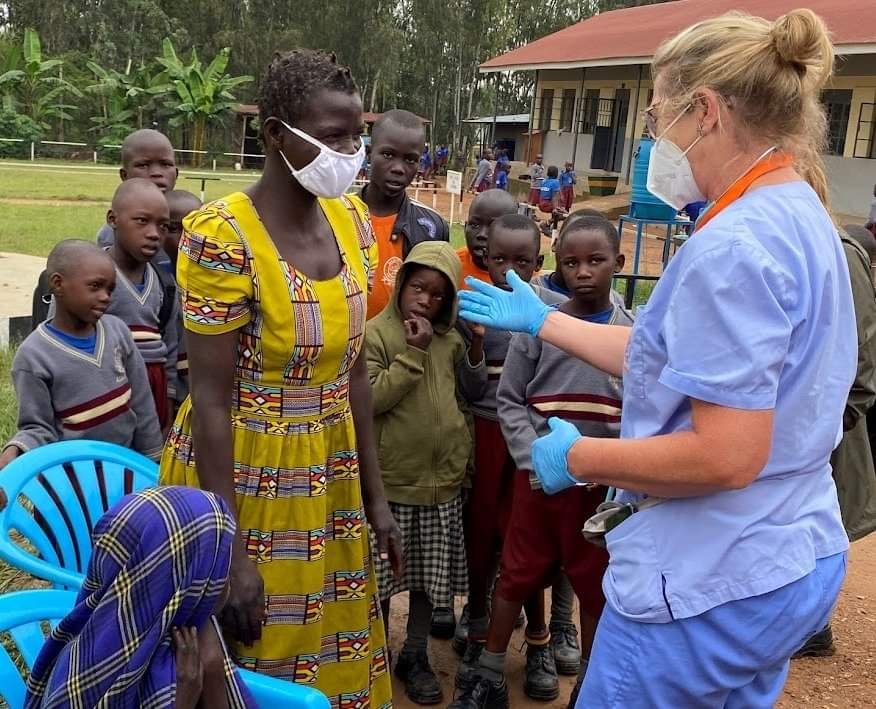
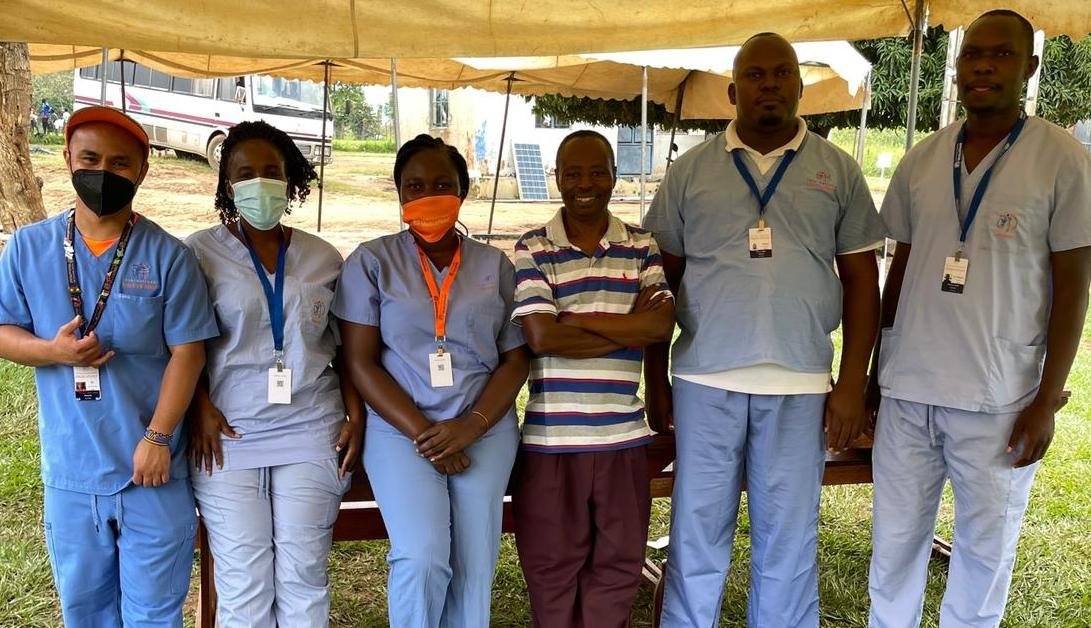
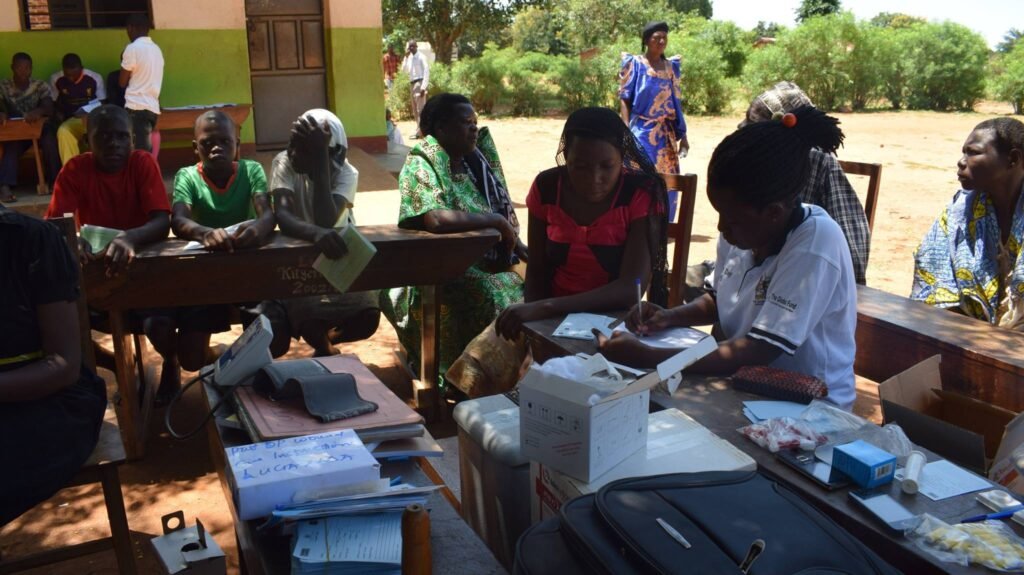
  • Volunteer doctors, nurses, clinicians and allied health professionals take part in community medical camps in underserved communities and humanitarian settings.
  • Outreach with qualified health professionals and host-facility coordination.
  • Consultation or screening only where authorised, with referral for needs beyond outreach capacity.
  • Accountable mobilisation and handling of medicines and supplies.
Workforce Mentorship, Volunteerism and Leadership
  • Mentorship and peer learning for health workers and students through institutional partnerships. Experienced and specialist professionals are paired with emerging health workers across partner hospitals and facilities, where mentees are trained and supervised in real clinical settings (Mentorship & Preceptorship).
  • Defined volunteer roles, orientation, supervision and professional scope. Healthcare volunteers may be attached to hospitals, clinics and health facilities to offer professional services and gain cultural exchange experience, with AMSIN supporting cross-border logistics where permitted (International Volunteerism & Service).
  • Cross-border learning where permitted and supported by host institutions.
Research, Innovations and Entrepreneurship
  • Strong partnerships with public and private authorities, agencies, universities, donors, civil society and community organisations to equip and empower medical students and professionals with essential skills, knowledge and mentorship, helping them turn locally generated ideas into innovations and create products, services and health-related jobs that strengthen health sectors across Africa.
  • Operate regional Research, Innovations and Entrepreneurships Centers for Healthcare (RIECH), taking early-stage medical research through proof-of-concept, prototyping and market scaling, to translate medical discoveries into commercial and clinical solutions, including digital health integration, medical device prototyping and healthcare delivery models across Africa.
Health Systems, Partnerships and Community Infrastructure
  • Collaboration with public authorities, health facilities, universities, civil society and community organisations.
  • Community-informed service improvement and infrastructure initiatives, subject to feasibility, permissions and funding.
  • Learning and advocacy informed by feedback and responsible evidence.
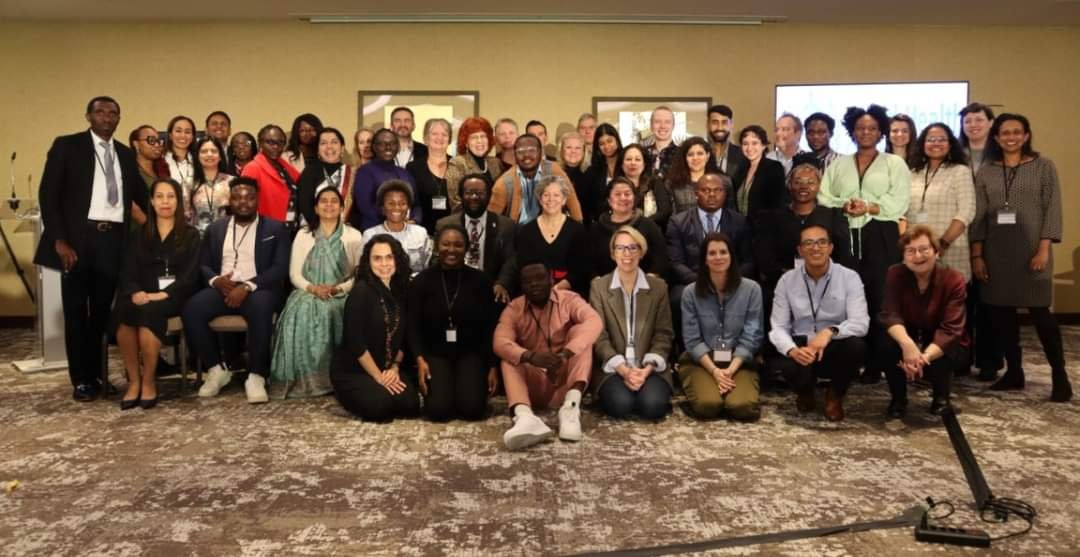
  • Annual African Health Conferences: a convening of experts, policymakers, development partners, investors and leaders from science, government and civil society to share research, infor
REHABILITATION, CONSTRUCTION & RENOVATION OF MEDICAL FACILITY WARDS.

African Medical Samaritans International Network (AMSIN) in partnership with Local communities, Local governments, Religious and cultural institutions and other partners work together to mobilize resources and expertise from around the world to support infrastructure development projects to support children and women access decent healthcare.

Activities including

  1. Minor Renovations & Painting of children and female Wards and sometimes entire medical facility.
  2. Construction of Children Wards and Maternity Wards where they don’t exist at all and the need is Very evident.
  3.  

Currently African medical Samaritans International Network (AMSIN) in partnership with the community of Butaleja District we are constructing a Children’s Ward at Nabiganda Health IV in Butaleja District to improve access to healthcare of Children across the district and neighbouring Districts. This is a 20+ beds Children’s ward with 4 extra big rooms for treatment, medical examination and staff resting section with 2 inside toilets and bathrooms.
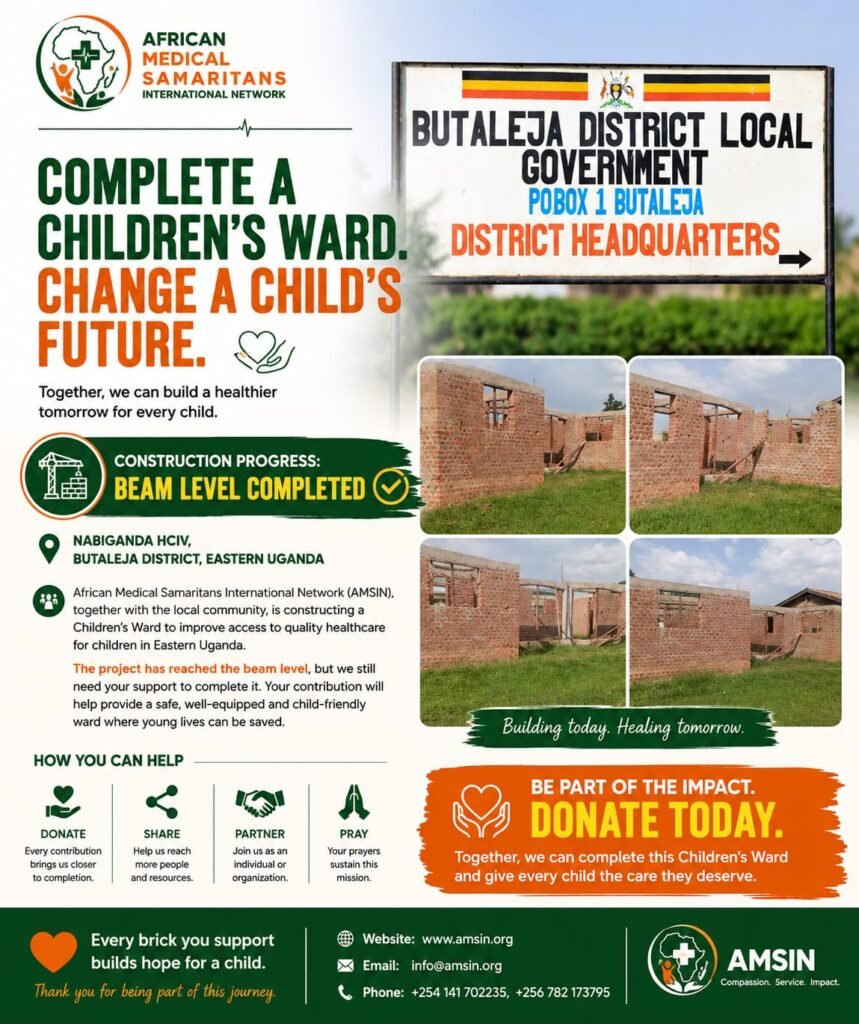
  • The building has reached the Beam level as seen in the photo and we continue to call up support and donations to complete the project by 2029.